Jamii Telecommunications Limited is under growing scrutiny from customers frustrated by what they describe as poor service delivery, delayed installations, and disappearing communication once payment is made. For many Kenyans, reliable home internet is no longer a luxury.
It is work, school, business and daily life. That is why complaints about companies taking money first and delivering later are now sparking anger and public backlash.
I recently experienced this first-hand after paying for a Faiba internet installation. The process began with a promising email from Jamii Telecommunications Limited confirming that they had received my installation request.
In the message, they stated that installation in areas or buildings confirmed as Faiba Ready is projected to be done within five working days. They added that installation in areas or buildings confirmed as Not Faiba Ready would take ten working days or more depending on approvals, permits, access and scope of works. It sounded like a structured and professional process.
They assured me that verification of my location had been initiated, and that installation would be scheduled based on their findings. The email also promised that signal activation would follow, with mapping completed and login credentials shared. It ended with the usual corporate closing line thanking me for choosing Faiba Internet.
But immediately after payment, what followed was a completely different customer experience. Calls stopped being picked. Follow-ups became difficult. When communication came through, it was often rude, dismissive and cold. It felt like once the money was received, the urgency disappeared.
This is the exact moment when many service providers in Kenya expose their worst side. They move fast during marketing and sales, then slow down or go silent during actual delivery.
The very next day, another email came through confirming that a team had visited my premises and established that there is no Faiba presence in the building. That single line changed everything. Suddenly, the installation was no longer a normal service order. It was now a network extension issue.
JTL explained that this would require a survey to determine cable length and routing, after which a bill of materials would be raised and sent through an internal approval process. Once approved, the extension work would be contracted, scheduled and completed, involving pulling distribution fiber cables and installing new JTL termination points.
Only after that would internal installation be done within my premises, including pulling an internet drop cable from the termination point to my house and installing a JTL router. Signal activation would then be done on the distribution fiber cable to the termination points.
Then came the part that angered me most. They stated plainly that they were currently at the first survey process and that the entire process may take fourteen working days to completion.
That is not a small adjustment. It is a major shift in service expectation, and it raises serious questions about how such a critical detail was discovered only after payment was processed.
If a building has no Faiba presence, that should be verified early and disclosed upfront before collecting money and giving hopeful timelines.
This is why customers feel cheated. Not because network extension is impossible or unreasonable, but because the truth comes late and the respect disappears quickly. A customer should not have to chase a company that has already been paid. Payment is not a favour.
It is an agreement. Once a business receives your money, it has a responsibility to deliver the service within a reasonable timeline and to communicate professionally throughout the process.
In Kenya, customers have become too familiar with certain phrases that are used repeatedly whenever service providers delay delivery. Internal approvals. Permit requirements. Scope of works. Scheduling.
Bear with us. We will share progressive updates. While these may be real technical issues in some cases, they have also become convenient shields that allow delays to drag on indefinitely without accountability. In many cases, these processes turn into endless waiting, with the customer stuck in limbo and unable to plan.
The deeper concern here is the pattern that seems to be emerging with some service providers.
They collect payment quickly, then push the customer into a slow internal system, where the customer has no direct visibility, no firm timeline and no reliable escalation path.
The customer becomes powerless, forced to wait, call, beg and plead for updates. That is not customer service. That is disrespect.
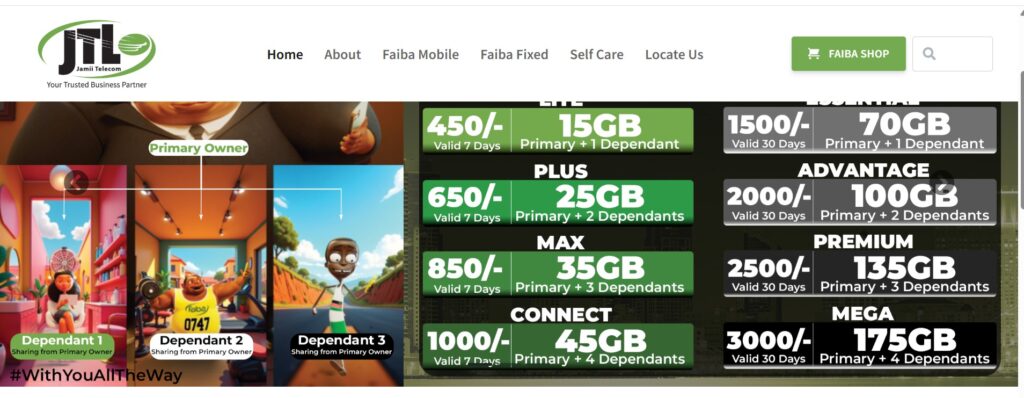
If Jamii Telecommunications Limited is serious about protecting its reputation and building trust, it must stop normalising this kind of experience. It should not accept payment before confirming whether a building is Faiba Ready.
It should not allow customers to discover major installation barriers after they have paid. It should not handle paying customers with arrogance or rude communication.
It should provide clear timelines that can be tracked, regular updates with actual dates, and working escalation channels that give customers a real human response. Most importantly, customers should be given fair options, including refunds or alternative arrangements, when timelines shift drastically.
Internet service is built on trust. The same way people trust M-Pesa with their money, they trust broadband providers with their work and their daily lives. When an internet company starts behaving like it cares only about money and not the customer, the brand begins to collapse. People don’t just leave because of pricing. They leave because they feel used.
The truth is simple. Customers are not buying megabytes. They are buying reliability, professionalism and respect. When a customer pays, then gets ignored, dismissed or forced into endless waiting, the company stops looking like a service provider and starts looking like a business that is comfortable failing customers because it believes there will be no consequences.
Kenyans deserve better. Jamii Telecommunications Limited must do better.


