For years, Brookhouse International School has stood as one of Kenya’s most prestigious learning institutions. Located in Nairobi and offering the British curriculum, the school attracts children from wealthy Kenyan families, diplomats, and expatriates seeking international education.
The institution promotes itself as a gateway to global universities and elite academic pathways. Its campuses boast modern facilities, international teachers, and students who routinely secure placements in universities abroad.
But beneath the reputation of prestige and privilege lies a trail of complaints, legal disputes, and controversies that have repeatedly drawn the school into public scrutiny.
Over the years, parents, students, and even courts have raised serious questions about discipline, fees, and the balance of power between elite private schools and the families they serve.
This investigative dossier examines the key controversies that have followed Brookhouse and why the school continues to generate both admiration and criticism.
The Pandemic Fees Battle That Triggered a Legal Storm
One of the most explosive disputes involving Brookhouse erupted during the Covid-19 pandemic.
When schools closed across Kenya in 2020, Brookhouse shifted to online learning. Parents expected fees to fall sharply because services such as boarding, transport, and physical facilities were no longer being used.
Instead, parents said the school continued demanding close to full fees.
A group of parents moved to court seeking to block the school from charging what they described as excessive fees for virtual classes. The parents demanded at least a 30 percent reduction in fees and accused the school of offering only a minimal discount despite the shift to remote learning. (Business Daily)
The case quickly turned into a high-profile legal confrontation.
At one point, the High Court ordered parents to temporarily pay half of the school fees while the dispute was being heard. (The Standard)
The parents argued that online learning could not justify the same fees charged for physical classes.
Brookhouse defended its position.
The school argued that teachers still had to be paid, infrastructure maintained, and academic services delivered even through online platforms.
Eventually, the High Court dismissed the parents’ petition, ruling that private schools depend entirely on fees to survive and cannot rely on government funding like public schools. (cytonnreport.com)
Although Brookhouse won the legal battle, the dispute exposed deep tensions between the school and sections of its parent community.
Expulsion Disputes and Bullying Allegations
Another controversy that placed Brookhouse under scrutiny involved a student who was suspended following a fight with classmates.
The student’s mother filed a case in court claiming that her son had been bullied and sexually harassed by fellow students before the fight occurred.
According to court documents, the parent accused the school of ignoring earlier complaints and unfairly punishing her child instead of addressing the bullying allegations. (Kenyans)
The High Court later ordered the school to allow the suspended student to continue learning virtually as the case proceeded.
The dispute raised difficult questions.
How are bullying complaints handled inside elite private schools?
Are disciplinary processes transparent and fair?
And do students receive adequate protection when conflicts occur among peers?
For many parents observing the case, it highlighted how complicated disputes with private institutions can become once they escalate to legal battles.
A Pattern of Court Cases
The bullying related dispute was not the only time Brookhouse appeared in court over student matters.
In another legal case, a parent argued that the school’s actions had violated a student’s rights and dignity during disciplinary proceedings. The complaint centered on how the school handled allegations and whether the student was given an opportunity to defend himself. (Kenya Law)
Such cases illustrate a recurring tension between the authority of private schools to enforce discipline and the rights of students and parents under Kenyan law.
Education experts say this conflict often arises because international schools operate under internal rules that sometimes collide with national legal protections.
When disagreements escalate, courts become the final arena for resolving them.
The Power Imbalance Between Schools and Parents
One reason disputes involving Brookhouse attract attention is the enormous power gap between elite private schools and individual parents.
Parents pay millions of shillings over the course of a child’s education.
Yet once a dispute arises, they often find themselves dealing with institutions backed by corporate management, legal teams, and complex internal regulations.
The pandemic fee dispute demonstrated this dynamic clearly.
Parents argued that they had little bargaining power despite paying huge fees.
The school argued that the contractual agreement between parents and the institution governed the relationship.
The courts ultimately treated the matter largely as a commercial dispute rather than a constitutional one.
The Economics of Elite Education
Brookhouse sits in a small group of international schools that charge some of the highest tuition fees in Kenya.
For many families, enrolling a child in such institutions requires massive financial commitment.
Fees can run into hundreds of thousands of shillings per term, with boarding students paying even more.
The high cost raises expectations.
Parents paying premium fees expect premium services.
They expect strong academic programs, safe environments, and transparent communication from school management.
When disputes arise, frustration tends to escalate quickly because the financial stakes are so high.
The Image of Prestige
Despite the controversies, Brookhouse remains one of the most sought-after schools in the country.
Its reputation rests on several pillars.
• British curriculum education
• International examinations
• Modern facilities
• Pathways to universities abroad
Many parents still view the school as one of the best gateways to international education.
Graduates frequently move on to universities in the United Kingdom, the United States, and Europe.
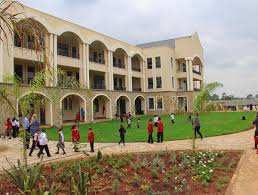
This global pathway helps sustain the school’s elite reputation.
Critics Say Prestige Should Not Shield Institutions from Scrutiny
Education advocates say controversies surrounding elite schools reveal a broader issue in Kenya’s education system.
International schools often operate outside the public spotlight because they serve a small, wealthy segment of society.
But when complaints arise, they raise important questions about accountability.
Should private schools be subject to stronger oversight?
Should parents have clearer rights when disputes arise?
And how should regulators balance private enterprise with student welfare?
These debates remain unresolved.
A Reputation Built on Success but Tested by Controversy
Brookhouse continues to expand and attract students from across Africa and beyond.
Yet its history of legal disputes and parent complaints shows how even prestigious institutions can face public backlash.
The school’s future reputation will depend on how it manages trust.
Elite schools depend heavily on reputation.
Parents who invest heavily in their children’s education expect transparency, fairness, and strong governance.
When those expectations collide with disputes over fees, discipline, or communication, even the most respected institutions can face intense scrutiny.
The Bigger Question for Kenya’s Private Education Sector
The controversies surrounding Brookhouse highlight a larger reality.
Kenya’s private education sector has grown rapidly over the past two decades.
International schools now operate as major educational businesses attracting wealthy families and international students.
But the rapid expansion of the sector has not always been matched with clear regulatory frameworks governing disputes between parents and institutions.
This leaves courts as the primary battleground whenever conflicts emerge.


