In 2022, Gladys Wanga did not merely win an election; she engineered what political analysts still regard as one of the most disciplined and effective campaigns in recent Kenyan history.
Her victory in Homa Bay County rested on three pillars of precision: a tightly unified coalition anchored by Raila Odinga, a powerful and historic gender narrative that cast her as a pioneer for women in high office, and an iron grip on message discipline that allowed her to dominate the political conversation from the first day of the race. It was strategic, coordinated, and ruthlessly effective.
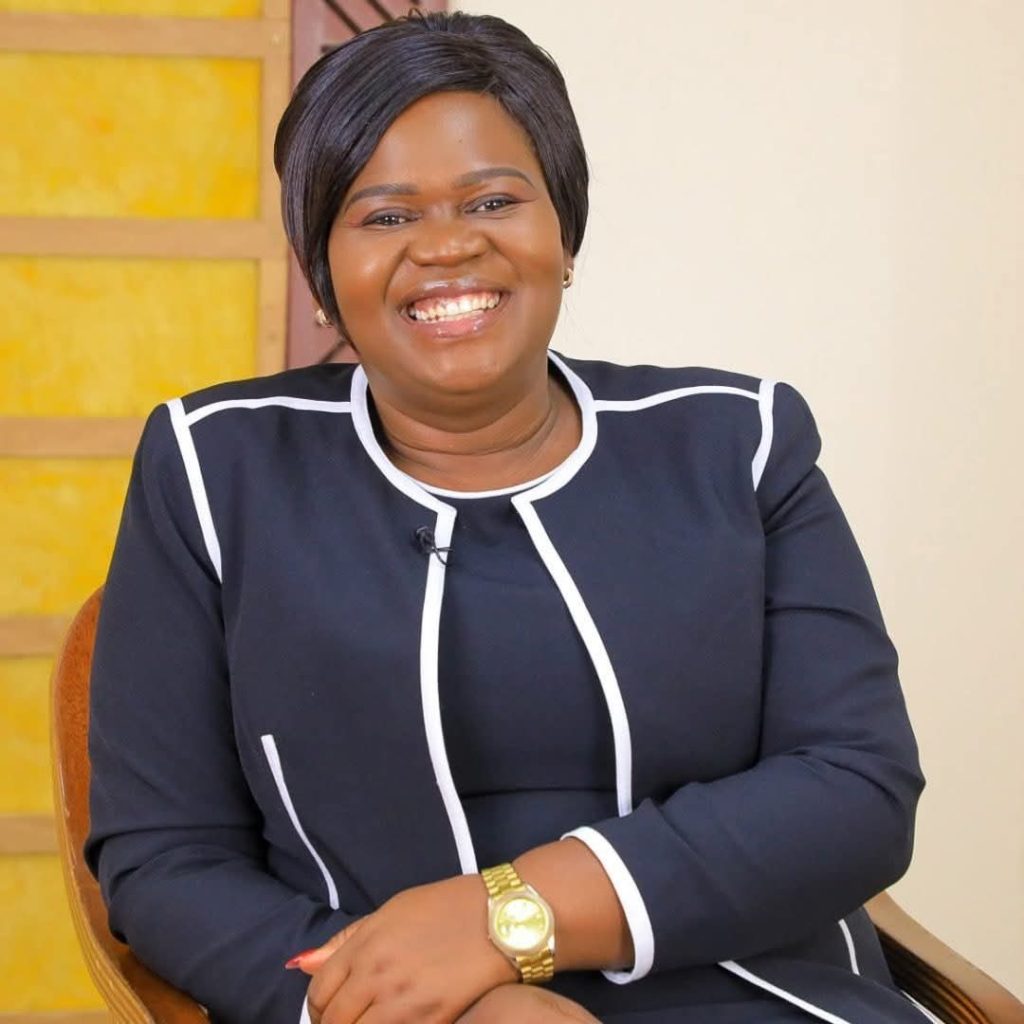
Long before polling day, however, Wanga had already amassed something rarer than votes: an overflowing reservoir of goodwill from mainstream media houses and social media platforms nationwide. As the quintessential Woman MP, she had sponsored landmark bills and spoken with clarity and passion on the floor of Parliament. Her star burned so brightly that commentators and citizens alike openly discussed her as the first credible female contender for the deputy presidency, the country’s second-most powerful seat. What the public did not fully see was the sophisticated machinery operating behind the scenes. A well-oiled public-relations apparatus, staffed by professional PR firms, took her relatively modest legislative record and transformed it into a compelling story of national promise. These firms skilfully shifted the spotlight away from any uncomfortable questions about her relationship with money and resources, focusing instead on potential, progress, and possibility. That is the quiet power of professional PR: it does not fabricate facts; it curates the lens through which the public views them. And for a season, it worked to perfection.
Yet the very operation that delivered triumph has since unravelled, quietly at first, then with alarming speed. Wanga began her governorship with momentum and national acclaim. She was widely seen as a rising star. Today, she appears confused and increasingly angry in her pursuit of a higher office, having been repeatedly touted as a future deputy president. Almost immediately after taking the oath, she is said to have largely abandoned Homa Bay, leaving the county she was elected to serve to grapple with governance while her attention drifted elsewhere. The governor who once dictated the national narrative now struggles to articulate even basic messages. The carefully polished image of competence and vision has cracked.
Power Won Externally, Lost Internally

The first signs of decline did not come from opposition fire. They erupted from within the very coalition that had delivered victory. The breakdown of Wanga’s relationship with her deputy governor, Joseph Oyugi Magwanga, was never a mere personality clash; it was a structural failure at the foundation of her administration. Coalitions win elections, but they must also be carefully managed and constantly renewed. What began as reportedly unmet pre-election agreements quickly spiralled into political sidelining, institutional conflict, and very public acrimony.
In Kenyan politics, losing a deputy is more than losing a partner. It is the loss of the backbone of the governor’s entire political architecture: grassroots networks, ethnic balance, and administrative continuity. From that moment, the aura of control Wanga had cultivated so carefully began to erode. Experienced operators who once formed the inner core of her machine quietly stepped back. The unity that defined 2022 gave way to visible fractures, and the county’s political engine began to stall.
*The Leadership Question: Control versus Counsel*
Beneath the visible political cracks lies a deeper, more damaging internal critique that surfaces repeatedly in private conversations among insiders, administrators, and former allies. There is a growing perception that Governor Wanga operates inside a tightly closed decision-making loop, one that shows little tolerance for dissenting views or uncomfortable advice. Insiders describe a leadership style that listens selectively, excessively centralises power, and sidelines those who offer contrary counsel.
The political consequences are predictable and familiar: experienced operators disengage, honest feedback vanishes, and decision quality deteriorates. What remains is an inner circle that rewards alignment over competence. In politics, this is a dangerous evolution. When a leader is surrounded only by affirmation rather than rigorous interrogation, small errors are no longer corrected in private; they compound in public and eventually become visible failures that opponents can weaponise.
When Governance Becomes the Opposition’s Message
As internal tensions deepened, public perception turned sharply against the administration. Across Homa Bay County, criticism began to crystallise around core governance failures: chronic delays in payments to suppliers and contractors, stalled development projects, and rising dissatisfaction among local leaders and administrators. Whether every complaint is entirely accurate or politically amplified matters less than its cumulative impact. In politics, perception does not merely reflect reality; it becomes reality.
The dominant narrative today portrays an administration struggling to deliver on the promises that swept it into office. That perception has been worsened by widespread claims that the governor and her close family members—particularly her brothers—have been running the county like a personal piggy bank, with little room for questions or accountability. Anyone who has demanded transparency or raised concerns about resource management, multiple sources allege, has been silenced; sometimes through institutional pressure, other times through more ominous means.
Even more chilling are the allegations linking opposition to the administration with violence. Wanga publicly wailed loudly and visibly after the assassination of Charles Ong’ondo Were, the Member of Parliament for Kasipul Constituency, on April 30, 2025. Her mourning, according to observers, was more intense and vocal than even that of Raila Odinga. Were, who in certain political circles was known for his ruthless approach to dealing with opponents, has been alleged by critics to have functioned as Wanga’s informal “Mr Fix-it.” Rural residents who openly opposed the governor, some claim, sometimes met tragic ends, euphemistically described in local parlance as being “six inches deep.” While these remain serious but unproven allegations circulating in political and community circles, their persistence has created a climate of fear and further damaged the administration’s credibility.
Instability at the Core
Strong governments project continuity and stability. Wanga’s administration has increasingly projected the opposite: constant disruption and flux. Frequent departmental restructurings, abrupt dismissals of senior officials, and repeated internal reshuffles have been presented by her team as bold reforms. Politically, however, they communicate something far less reassuring; a leadership perpetually searching for control, a system struggling to find coherence, and a government without a stable centre.
This persistent instability does not destroy confidence in a single dramatic moment. It erodes it slowly, through an unrelenting drip of uncertainty. Investors hesitate, civil servants play it safe, and ordinary citizens grow weary of a leadership that seems more consumed by internal power struggles than by service delivery. The cumulative effect is a county that feels increasingly adrift.
The Communications Collapse
The most decisive and self-inflicted wound has been in the realm of communications, the very arena where Wanga once excelled. During the 2022 campaign, her messaging was intentional, forward-looking, and agenda-setting. She shaped the narrative; the media and public followed. Today, the dynamic has completely reversed. Her communications are reactive, defensive, and crisis-driven. Instead of leading the conversation, her team is perpetually responding to it; often under pressure and without a coherent strategy.
This collapse did not happen by accident. According to multiple well-placed sources, Wanga abandoned the very experienced PR firms and seasoned communications professionals who had engineered her earlier success. She is said to have refused to settle outstanding payments amounting to millions of shillings, effectively burning bridges with the architects of her national brand. Having dispensed with their institutional memory and counsel, the governor now finds herself struggling to articulate a clear vision or defend her record. In modern political strategy, ceding control of the narrative is fatal. The moment a leader begins explaining rather than shaping, the battle is already half lost. Narratives are no longer being crafted; they are being managed—and managed poorly.
The Fragmentation of Power
As governance concerns and communication failures have deepened, political support has begun to splinter. The warning signs are unmistakable: former allies have become open critics, local leaders publicly express dissatisfaction, and opposition figures grow bolder with each passing month. Even more damaging is the emergence of a potent new label, “wantam governor.” In Kenya’s unforgiving political ecosystem, such narratives do not arise randomly; they reflect a quiet but decisive shift in elite sentiment. When elite sentiment moves, electoral outcomes usually follow.

The reported family dominance over county resources, the silencing of accountability seekers, and the darker allegations surrounding opposition voices have only accelerated this fragmentation. What was once a formidable political machine now appears brittle and inward-looking.
From Control to Chaos
The contrast between 2022 and today is stark. Then there was coalition discipline, message control, and strategic clarity. Today, there is internal fragmentation, narrative drift, and reactive communication. This is not a simple decline; it is an inversion. Governor Wanga has moved from shaping her political environment to being shaped by it. The woman once spoken of as a future deputy president now finds herself fighting to maintain basic relevance in the county she leads.
The Strategic Lesson
The story of Gladys Wanga is larger than one leader. It is a case study in a timeless political truth: winning power and sustaining power require two entirely different skill sets. The coalition-building, narrative mastery, and public-relations brilliance that secured victory in 2022 have not translated into effective governance or sustained public trust. Her administration now faces a convergence of existential risks, coalition breakdown, governance credibility deficits, and complete loss of narrative control. Any one of these would be dangerous; together they are politically existential.
Political capital is not lost overnight. It is spent incrementally through missteps, miscalculations, and missed opportunities. What began as one of the most disciplined campaigns in recent Kenyan politics has become a cautionary tale of what happens when internal alliances are neglected, governance narratives are left unmanaged, and communications lose strategic direction.
2027 is near, and the window is closing
Unless there is a decisive and comprehensive reset, one that addresses both the structural failures and the perceptual damage, the trajectory is clear; not only toward electoral vulnerability in 2027, but potentially toward long-term political marginalisation.
Governor Gladys Wanga should come to her senses now. It is time to hire competent PR firms that once propelled her to national prominence; the very professionals she abandoned and, according to reports, failed to compensate.
The money she believes she possesses cannot bribe or buy a path to the deputy presidency; shortcuts have never sustained a political career at the highest levels. A good reputation is like an expensive perfume: once it evaporates, it cannot easily be replaced. Guard it with all your might, before the fragrance of promise that once defined you fades entirely into memory.


