Equity Group CEO James Mwangi took home a staggering Sh275.7 million in total compensation for the year ended December 2025, even as the bank faces growing scrutiny over governance issues and a series of controversies that critics say point to deeper problems inside the institution.
The massive payout came after Equity Group Holdings reported its highest ever net profit of Sh71.9 billion, making it the most profitable company in Kenya ahead of KCB Group and Safaricom. While the lender celebrated the milestone, the huge compensation package for its long serving chief executive has sparked fresh debate about executive excess in Kenya’s banking sector.
Mwangi’s total earnings jumped sharply from Sh166.28 million in 2024 to Sh275.7 million in 2025, representing a 65.8 percent increase and marking the first time his annual pay has crossed the Sh200 million mark. The compensation package included Sh124.86 million in basic salary, Sh90.8 million in bonus payments, Sh37.45 million in gratuity, Sh10.78 million in expense allowance, Sh7.05 million in leave pay and allowance, Sh4.7 million in non cash benefits and Sh45,000 in pension contributions. The sharp rise in his earnings was largely driven by the bank’s record profit performance which triggered large executive bonuses under the lender’s performance based reward scheme.
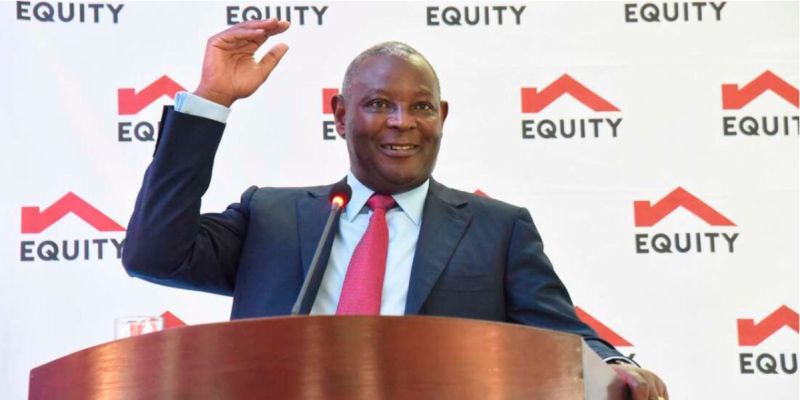
Beyond the huge salary package, Mwangi is also set to receive an even larger windfall through dividends. The CEO holds about 127.8 million shares in the bank, and following the increase in Equity’s dividend payout to Sh5.75 per share from Sh4.25, he is expected to pocket about Sh734.9 million in dividends. When combined with his executive pay, the total income Mwangi will earn from the bank could exceed Sh1 billion in a single year, a figure that has raised eyebrows among critics who argue that the compensation comes at a time when the lender continues to face governance questions.
The growing criticism stems partly from a series of disputes involving the bank and some of its corporate clients. In recent months, several companies have complained about how the bank handled loan facilities, restructuring arrangements and sensitive financial information. Some of the disputes have escalated into court battles, exposing internal decision making and raising concerns about how certain corporate accounts have been managed.
Analysts say the controversies have begun to chip away at the bank’s reputation even as it continues to post strong profits. Critics argue that record earnings cannot hide what they describe as growing governance challenges within one of Kenya’s largest financial institutions. Some business leaders have privately complained that the bank’s aggressive loan recovery tactics and internal management disputes are damaging long standing business relationships.
Financial disclosures also show that the bank’s staff costs have been rising steadily. Equity spent Sh39.46 billion on staff expenses in 2025, up from Sh33.36 billion the previous year. The increase was partly driven by growth in the bank’s workforce, which rose to about 13,370 employees across its operations. The lender has defended the rise in staff spending by saying that strong profits allowed it to share benefits across the organisation. Critics, however, say the biggest financial gains continue to accumulate at the very top of the institution.
The surge in executive pay also reflects broader trends within Kenya’s banking industry where major lenders have reported strong profits driven largely by higher interest rates and increased lending margins. While some banks faced challenges such as rising loan defaults and slower growth in certain business segments, the sector overall remained one of the most profitable parts of the country’s economy.
Despite the impressive financial results, governance experts warn that the concentration of influence around long serving executives can create risks for institutions. Mwangi has led Equity for decades and is widely credited with transforming the bank from a struggling building society into one of Africa’s largest financial groups. Yet critics argue that such long tenure can also weaken internal oversight if strong checks and balances are not maintained.
The debate surrounding Mwangi’s Sh275.7 million pay package therefore reflects a deeper conversation about leadership accountability in Kenya’s corporate sector. Supporters point to the bank’s record profits and regional expansion as evidence that the CEO’s rewards are justified by performance. Critics say the celebrations over profits and executive bonuses ignore the growing list of disputes and controversies that continue to trail the institution.
As Equity Group cements its position as Kenya’s most profitable company, the spotlight on its leadership is unlikely to fade. The question now being asked in financial circles is whether record profits alone are enough to justify executive compensation of this scale while governance concerns continue to surface around one of the country’s most powerful banking institutions.


