A controversial high-level meeting claimed to have taken place in Nyala is now facing growing scrutiny after visual evidence raised serious doubts about its true location.
Images circulating online show senior figures seated at what appears to be a formal conference setup, complete with microphones, branded conference materials, and bottled water placed neatly on the table. At first glance, the setting suggests a structured political or diplomatic engagement.
But a closer look is now fueling questions.
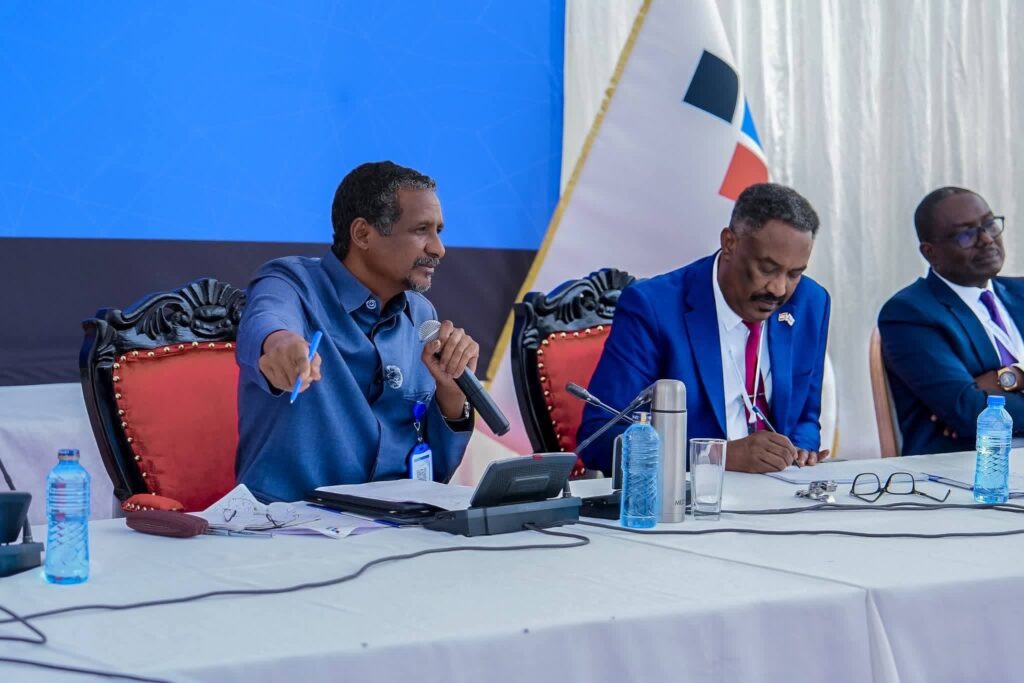
The meeting has been presented as taking place in Nyala, a city in Sudan that has become a focal point in ongoing conflict dynamics. However, analysts and observers are pointing to inconsistencies that challenge that claim.
One of the most striking details lies in the bottled water visible on the table.
Despite attempts to obscure branding by removing bottle labels, the caps still carry identifiable markings. Those markings appear consistent with a Kenyan mineral water brand, raising immediate questions about whether the meeting could actually have taken place in Kenya rather than Sudan.
This detail, while seemingly small, is significant.
Because logistics matter.
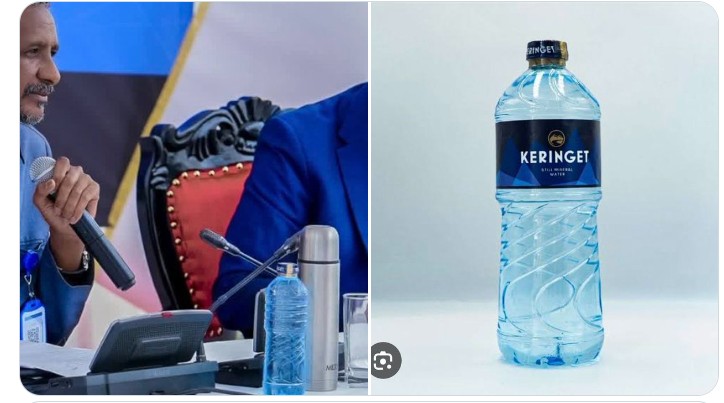
Transporting locally branded bottled water into an active conflict zone, especially in a setting like Nyala, would be highly unusual. The presence of such items suggests a more controlled, secure, and stable environment than what would typically be expected in a conflict affected area.
The setting itself also raises questions.
The room appears orderly, well furnished, and equipped with conference infrastructure that is more consistent with established venues in cities like Nairobi than with a war affected urban center. The seating arrangement, audio equipment, and overall setup suggest access to facilities that are not easily available in active conflict zones.
These observations have led to a growing line of inquiry.
If the meeting did not take place in Nyala, then where did it take place.
And why present it as being in Nyala.
Critics argue that such misrepresentation, if proven, could point to a broader effort to shape perception. Presenting a meeting as being held in a contested or symbolic location can carry political weight. It signals control, legitimacy, and presence on the ground.
But if that presence is staged elsewhere, the narrative begins to shift.
It becomes less about governance and more about optics.
There are also questions about the participants themselves. Observers note that the individuals present appear to be operating in a controlled and secure environment, far removed from the instability associated with conflict zones. This has led to speculation that key actors may be conducting high level engagements outside Sudan while maintaining a narrative of internal control.
Such a scenario would raise deeper concerns.
Who is hosting these meetings.
Under what arrangements.
And what interests are being served.
At the center of the debate is the issue of credibility. In conflict situations, information is often contested. Narratives are shaped, challenged, and reshaped in real time. This makes verification critical.
When inconsistencies emerge, even in small details like a bottle cap, they can undermine the entire narrative.
For now, no official clarification has been provided regarding the exact location of the meeting. The lack of response is only adding to the speculation, with calls growing for transparency and verification.
Experts say that in today’s information environment, visual evidence can be as powerful as official statements. Every detail matters. Every frame can be analyzed. And every inconsistency can become a focal point.
The images in question have now become exactly that.
A focal point.
Because they raise a simple but powerful question.
Was the meeting really held where it was claimed.
Or is there more to the story than has been publicly acknowledged.
Until that question is answered, the doubts will remain.
And the scrutiny will only intensify.


