What started as a shocking attack on Vihiga Senator Godfrey Osotsi at Java House, West End Mall, has now exploded into a full-blown political storm one that is shaking the foundations of Nyanza politics and raising uncomfortable questions about power, loyalty, and the rule of law.
Kenyans woke up to disturbing footage: a sitting senator, beaten in broad daylight, inside a public restaurant.
CCTV clips show a group of men storming the café, pinning Osotsi down, slapping and kicking him as stunned onlookers watched.
This is not just politics. Hii ni mambo ya usalama wa nchi.
If a senator can be attacked like that in Kisumu town, what about the ordinary mwananchi?
Osotsi was rushed to hospital in Kisumu before being airlifted to Nairobi. His condition sparked outrage across the country, with many asking:
Tuko wapi kama taifa?
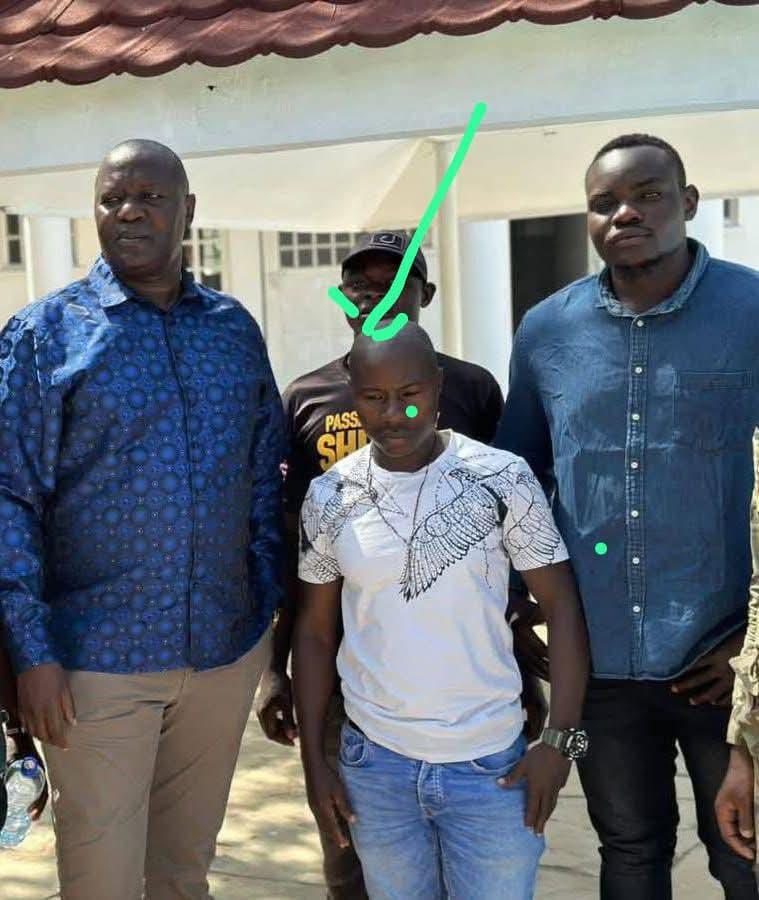
At the centre of the controversy are claims yet to be officially substantiated linking individuals associated with Kisumu Senator Prof. Tom Ojienda to the attack. Images circulating online appear to show a group of young men repeatedly in his proximity, some allegedly within his professional spaces.
A leaked internal memorandum listing over 30 individuals described as part of an “oversight” structure has further fueled speculation.
One name that has consistently surfaced is Lucas Otieno (No. 31), also known as “Dogo” from Kondele. According to sources, Lucas Otieno is alleged to be:
A staff member linked to Ojienda’s structures
Connected to local networks in Kisumu
Associated in online claims with previous disruptive incidents
Prof. Ojienda has built a reputation as a polished legal mind and calculated political operator. But critics now argue that behind that image lies a broader ambition—to consolidate influence across Kisumu, Nyanza, and Western Kenya.
With shifting political dynamics and the looming question of succession in the region, the stakes are undeniably high. And in the race to fill that space, the line between political organization and alleged excesses can become dangerously thin.
A Web of Names and Allegations.

Embakasi East MP Babu Owino has also publicly listed individuals he claims were involved in the attack, including:
Lucas Otieno alias Dogo
Vincent Odhiambo alias Tinga
Carlos Owiti alias Kalonje
Eric Otieno alias Dude
Kleen Kwere
Boy Okoth
Brian Otoyo
Allan, Kevin, Ronney, Buda, among others.
Authorities have not officially confirmed the full list.
However, the overlap between those named publicly and those arrested has raised further questions.
Detectives from the Directorate of Criminal Investigations (DCI) in Kisumu County have arrested three suspects in connection with the attack on Vihiga Senator Hon. Godfrey Osotsi at Java House, West End Mall.
The suspects, identified as Carlos Owiti alias Kalonje (24) from Nyalenda, Eric Otieno alias Dude (39) from Manyatta, and Vincent Odhiambo alias Tinga (27) from Nyalenda, are currently in police custody and are being processed for arraignment in court.
Investigations have been intensified, with detectives actively pursuing additional suspects linked to the incident.
The Directorate of Criminal Investigations thanks members of the public who have volunteered useful information to aid the ongoing investigations and urges continued cooperation as detectives work to bring all perpetrators to justice.
Rising Tensions Beyond Kisumu.
The impact of the attack has already spilled beyond Kisumu.
In Luanda, Vihiga County, protests erupted, leading to highway disruptions. The area’s delicate ethnic balance home to both Luhya and Luo communities has heightened fears of broader tensions.
Many are warning that political recklessness could ignite divisions with far-reaching consequences.
The attack on Senator Godfrey Osotsi has drawn rare, unified condemnation from leaders across Kenya’s political spectrum cutting across party lines and ideological differences.
Nairobi Senator Edwin Sifuna and Siaya Governor James Orengo, who personally visited Osotsi in hospital, have both spoken out firmly, warning that the country must not slide into a culture where violence becomes an acceptable tool in political competition.
Their message was clear: disagreements in leadership must be settled through debate, law, and democratic processes not intimidation or force.
Civil society organizations have also raised the alarm, stressing that this incident goes beyond one individual.
For many observers, this moment represents more than just condemnation it is a collective warning that Kenya cannot afford to normalise political violence, especially as the country edges closer to another election cycle.


