Presidential Elections in China
By Via Kunani
In most democracies around the world, citizens take pride in casting their votes to choose national leaders. But in China, things are fundamentally different. The people do not elect the president, and there are no presidential campaigns or nationwide voting. Why?
Let’s explore, through the direct words of Via Kunani, the reasoning behind this system — and the strategic lessons it may hold.
“No Chinese citizen wakes up one morning saying: ‘I’m going to vote for my president.’”
“WHY? Because the Chinese president is not chosen by the people. He is selected by members of the CHINESE COMMUNIST PARTY.”
The Chinese Communist Party (CCP), the ruling entity in China since 1949, is not an open club anyone can join. Instead, it’s described as an elite meritocratic structure.
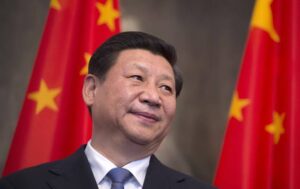
“But wait — it’s not a political party like you might imagine. It’s not a neighborhood political club anyone can join. NO. The Chinese Communist Party is an ELITE. You don’t get in just because you want to. You get in because you are SELECTED.”
And who gets selected?
“ELITES. TRAINED individuals. EDUCATED individuals. POWERFUL people. People who have already proven their ability to think STRATEGICALLY, ECONOMICALLY, and POLITICALLY.”
China’s leadership model is deeply pragmatic — and built on a controversial but deliberate principle: not everyone is equally equipped to choose national leadership.
“Someone who is poor, who doesn’t know if they’ll have food tonight, who doesn’t know if they’ll survive the night… cannot possibly have the clarity of mind needed to choose a country’s president.”
“Yes, it’s hard to hear. But it’s the TRUTH. Someone who can’t even understand their own life… can’t understand the life of a country.”
Rather than being a democratic system built on mass participation, China’s model is about selection, discipline, and proven competence.
“Do you really think a poor person who knows nothing about geopolitics, economics, international relations, industrial strategies, national defense… can wisely choose who should govern a power like CHINA? I don’t think so.”
This model flies in the face of modern liberal democratic values — but China argues that it’s more stable, more effective, and more results-driven.
“You can be emotional, shouting ‘democracy, democracy,’ but China is PRAGMATIC.”
“It prefers to entrust the governance of its people to TRAINED MINDS, to people who have been SELECTED, SCREENED, TRAINED for this.”
To even enter the CCP, one must demonstrate a strong track record and exceptional abilities.
“Power is not earned through emotional ballots — it is earned through COMPETENCE, RIGOR, DISCIPLINE, and PROOF.”
“In China, they don’t play with the future of the nation. They don’t bet on the ignorant majority. They give responsibility to those who have proven they can carry the weight of reality.”
4 Strategic Lessons from China’s Governance Model
Via Kunani distills China’s model into four key lessons — ones that can also be applied in corporate strategy, leadership, and policy-making around the world.
1. Competence Outweighs Popular Opinion
“A nation or company grows when it is led by the most competent — not the loudest.”
China avoids the political theater of campaigning and instead focuses on selecting leaders based on their expertise and results.
“In 40 years, it rose from a developing country to the 2nd largest economy in the world — and soon possibly the first.”
2. Elites Are Not a Threat When Well Managed — They Are a Necessity
“If you want elite results, you need elites in charge.”
Membership in the Communist Party is considered the apex of China’s meritocracy. This elite management has led to large-scale successes.
“This strategy helped China lift over 800 million people out of poverty in 30 years, create giants like Huawei, Alibaba, Tencent, and position itself as a global leader in technology, infrastructure, and AI.”
3. Stability Is Better Than Democratic Chaos
“Long-term construction requires avoiding impulsive course changes.”
Rather than changing leadership or policies every election cycle, China plans across decades.
“Mega-projects like the Belt and Road Initiative, the development of megacities, or technological dominance are planned across generations.”
“Meanwhile, other nations spend their time making and undoing public policies after each election — leading to instability, waste, and stagnation.”
4. Guided Collective Intelligence Is More Effective Than the Illusion of Freedom
“A population guided by a clear vision moves faster than one drowning in disorder.”
With centralized decision-making, China can execute large-scale plans quickly and decisively.
“RESULT: Swift decisions, infrastructure built in weeks, a booming digital economy, and rising global influence.”
“Meanwhile, countries where ‘everyone gives their opinion’ struggle to build a simple bridge or pass a strategic law.”


