When a Cabinet Secretary begins calling himself a whistleblower, it usually signals that something deeper is happening behind the scenes. In Kenya’s political theatre, that moment often comes when pressure is mounting, investigations are closing in, and the public mood has already shifted. The latest official walking that tightrope appears to be Energy Cabinet Secretary Opiyo Wandayi, who now finds himself presenting himself as the man exposing the rot in a sector he is supposed to be running.
The pattern is not new. Kenya has seen this political script play out before. Officials initially defend their ministries and dismiss allegations. When the pressure escalates, they begin speaking about cartels sabotaging reforms. Then comes the familiar claim that they are victims of disinformation campaigns. And finally, when the scandal refuses to fade, the narrative shifts dramatically. The official suddenly becomes the whistleblower who claims to have uncovered the very wrongdoing that flourished under his watch.
For many Kenyans, that storyline is now becoming predictable. Once a minister or senior government official starts portraying himself as the whistleblower inside his own ministry, the public often reads it differently. Instead of reassurance, it raises uncomfortable questions. If you are the person in charge of a docket, how do you suddenly become the outsider exposing wrongdoing within it?
This is precisely the question emerging around Wandayi’s recent statements. The Energy ministry is currently under intense scrutiny following the unfolding scandals within the sector. Senior officials have already faced investigations and arrests over issues linked to fuel stock manipulation and other irregularities that have shaken confidence in the management of Kenya’s energy industry.
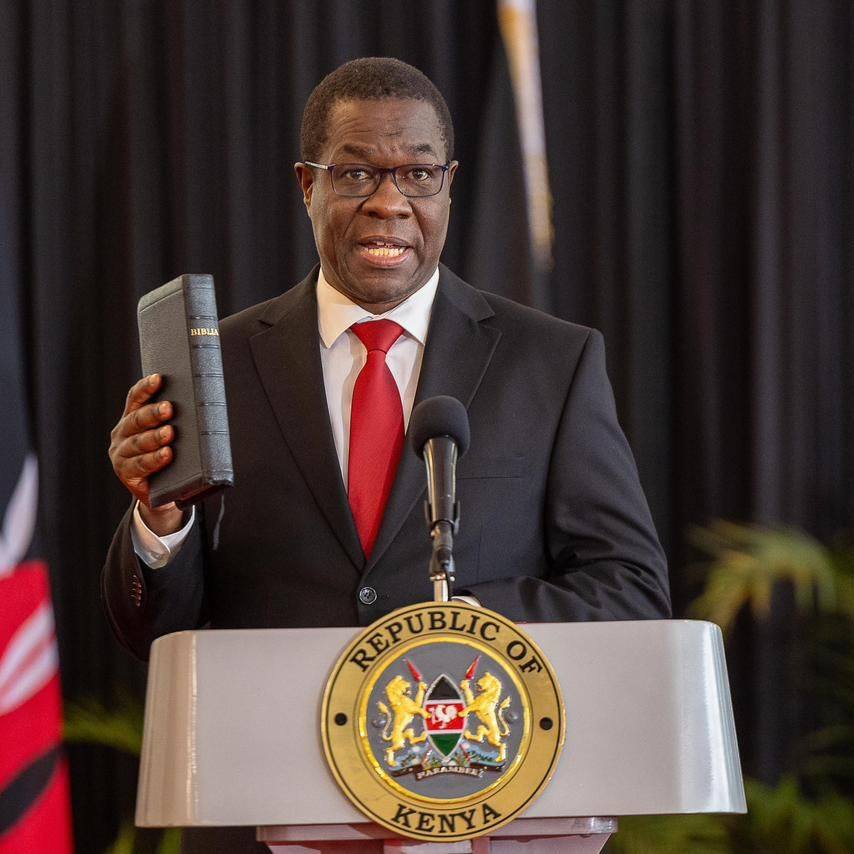
Against that backdrop, Wandayi’s attempt to position himself as the one revealing the rot has sparked debate.
Critics argue that a whistleblower typically operates outside the centre of power. Whistleblowers are usually insiders who risk their careers to expose wrongdoing by powerful individuals. They are rarely the ones holding the highest authority in the very system under investigation.
Yet in the current situation, the person presenting himself as the exposer of corruption is also the person heading the ministry responsible for overseeing the sector.
This contradiction is exactly what has fueled skepticism.
Kenya’s political history provides examples of how this narrative often unfolds. During the infamous National Youth Service scandal, former Cabinet Secretary Anne Waiguru also adopted the whistleblower stance when the allegations surrounding her ministry intensified. She presented herself as the person uncovering corruption networks within NYS. But by that time, the political tide had already turned. Public opinion had hardened, investigations were expanding, and the pressure eventually culminated in her resignation.
That episode remains fresh in the country’s collective political memory.
It is precisely why many observers are now viewing Wandayi’s language with caution. The public has seen the playbook before. It often begins with denial, moves through blame, and eventually lands on the whistleblower narrative when the crisis reaches the minister’s doorstep.
In Kenya’s political culture, the phrase “cartels are fighting back” has become a familiar defensive line. Ministers facing criticism frequently claim that powerful networks within their sectors are resisting reforms. While cartels do exist in many industries, the public has grown wary of the argument when it is deployed during scandals.
The problem is that the claim often surfaces only after wrongdoing has already been exposed.
When officials speak about cartels while they are already under scrutiny, the explanation begins to look less like a warning and more like damage control.
The energy sector is particularly sensitive to such controversies because it touches nearly every aspect of Kenya’s economy. Fuel prices affect transport, manufacturing, food costs, and household budgets. Any allegation of manipulation within the sector immediately triggers national concern.
Recent developments have only amplified that concern.
Investigations into the energy sector have already led to the arrest of senior officials over allegations of falsifying fuel stock data and manipulating supply figures. Authorities believe the manipulation may have been used to justify emergency fuel imports under questionable circumstances.
The scandal has shaken confidence in the oversight structures meant to protect consumers and ensure transparency in the industry.
With those investigations underway, Wandayi’s sudden positioning as the man exposing the mess has triggered sharp reactions.
For some observers, the move looks like a classic political survival strategy.
In moments of crisis, politicians sometimes attempt to reposition themselves as reformers rather than administrators. By claiming the role of whistleblower, a minister attempts to distance himself from the scandal while simultaneously presenting himself as part of the solution.
But such a strategy carries risks.
The public may ask why the wrongdoing was not discovered earlier if the minister was truly committed to exposing it. They may also question whether the person at the top of the chain of command can credibly portray himself as an outsider uncovering corruption within his own office.
That credibility gap is where the political danger lies.
Once the narrative shifts from leadership to self-defense, the perception of authority begins to weaken.
In political crises, perception often matters as much as facts. When the public begins to see a minister as struggling to control events rather than directing them, the pressure on that minister intensifies.
That is the stage where Wandayi appears to find himself now.
His tone has shifted noticeably. Statements that once projected confidence in the ministry’s control of the sector are increasingly accompanied by warnings about internal sabotage and hidden networks operating behind the scenes.
Such language may resonate with loyal supporters, but it rarely calms a skeptical public.
Instead, it often reinforces the sense that the situation is slipping beyond the minister’s control.
Political analysts note that when senior officials begin to speak more like investigators than administrators, it can signal that the endgame of a political crisis has begun.
At that stage, the conversation often shifts from reform to responsibility.
The public begins to ask who should ultimately be held accountable for the failures being exposed.
That question becomes particularly difficult for a minister who has already begun presenting himself as the whistleblower.
If the wrongdoing is confirmed, critics will ask why it happened under his watch.
If the wrongdoing cannot be proven, critics will question why the alarm was raised in the first place.
Either way, the political pressure rarely disappears.
Kenya’s political landscape has repeatedly shown how quickly fortunes can change once a minister becomes associated with a major scandal. The transition from defender to whistleblower often occurs during the final chapter of that process.
When that moment arrives, the story tends to move rapidly toward its conclusion.
For now, Wandayi insists he is exposing powerful interests within the energy sector.
But in the court of public opinion, the question has already begun circulating.
Is the Energy CS exposing a scandal?
Or is he simply narrating the final act of one?


