A fierce legal battle has erupted in Nairobi after the High Court temporarily stopped Equity Bank Kenya from auctioning a prime office property linked to former Chase Bank chairman Zafrullah Khan.
The contested property, located along Riverside Drive, sits at the center of a loan dispute that has now ballooned to nearly Sh1 billion.
The court issued temporary orders halting the planned auction that had been scheduled for April 2, pushing the matter to April 16 to allow the court to determine whether the bank followed the law in its attempt to seize and sell the building.
But the case is now turning into something much bigger than a simple loan recovery dispute.
It is rapidly becoming a major expose into how banks enforce debts, how currency conversions can dramatically inflate loan balances, and how one of Nairobi’s most valuable commercial properties became entangled in the lingering fallout from the collapse of Chase Bank.
Billion Shilling Property at the Center of the Fight
The dispute involves Riverside Mews Limited, a company associated with Khan that owns a prominent office block on Riverside Drive.
The property is currently occupied by SBM Bank Kenya which uses the building as its head office.
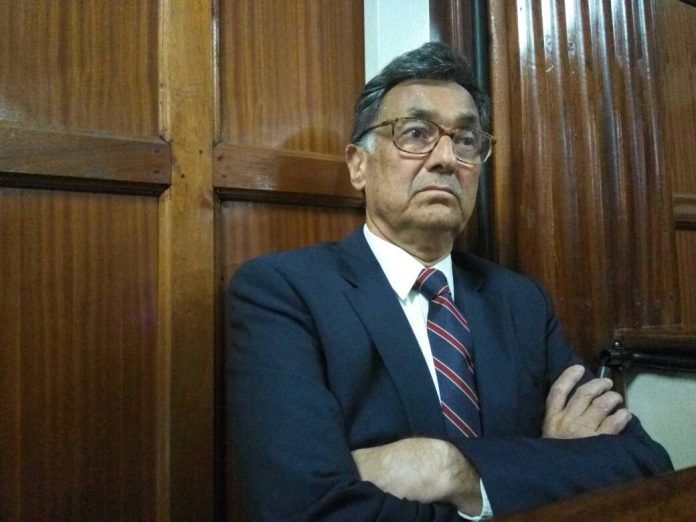
According to court filings, Riverside Mews borrowed millions of dollars from Equity Bank in two separate loans.
The first loan, amounting to about $5.5 million, was taken in October 2012.
A second loan of approximately $4 million followed in June 2016.
The office block was used as security for the loans.
However, what began as a conventional commercial lending arrangement has now escalated into a bitter legal confrontation involving disputed loan calculations, currency conversions, and allegations of unlawful recovery procedures.
Allegations of Inflated Debt
Riverside Mews has told the court that the debt being claimed by Equity Bank was dramatically inflated through what it describes as a questionable currency conversion.
According to the company, the bank converted an outstanding dollar balance of about $7.48 million into Kenyan shillings at an exchange rate of Sh145.50.
This conversion allegedly pushed the debt to approximately Sh1.087 billion.
The move also reportedly caused quarterly repayment instalments to nearly double.
Lawyers representing Riverside Mews argue that the conversion was carried out unilaterally and without proper agreement.
They claim the bank effectively transformed a manageable dollar loan into a massive shilling liability.
The dispute highlights a growing risk faced by borrowers who take loans in foreign currencies.
Exchange rate fluctuations can dramatically increase the real value of debt.
But Riverside Mews insists the issue goes beyond currency risk.
The company claims the bank did not follow mandatory legal procedures before initiating the auction.
Dispute Over Auction Process
One of the central arguments in the case is whether Equity Bank followed the statutory steps required before auctioning property used as loan security.
Under Kenyan law, lenders must issue specific notices to borrowers before they can sell secured property.
These include statutory notices and redemption notices warning the borrower of impending sale.
Riverside Mews argues that these notices were either not issued or were issued improperly.
If the court agrees, the entire auction process could be declared unlawful.
The company has warned that selling the property would permanently extinguish its rights over one of the most valuable commercial assets linked to the former Chase Bank chairman.
For now, the High Court has agreed to pause the sale until the dispute is resolved.
Shadow of Chase Bank Collapse
The case cannot be separated from the broader financial drama that followed the collapse of Chase Bank in 2016.
At the time, the bank’s failure triggered one of the most significant banking crises in Kenya’s recent history.
The collapse exposed allegations of insider lending and questionable financial practices.
Authorities later stepped in to manage the fallout and protect depositors.
The Kenya Deposit Insurance Corporation became involved in recovering assets linked to the failed bank.
The Riverside Drive property has since become part of that wider effort.
KDIC is reportedly pursuing its own claim related to the asset as it attempts to recover money tied to losses suffered by depositors.
This means the Riverside building is now entangled in multiple legal battles at once.
A Property Everyone Wants
The Riverside office block is not just another commercial property.
Located in one of Nairobi’s most prestigious business districts, the building represents a prime asset worth close to Sh1 billion.
Its current tenant, SBM Bank, reportedly pays substantial rent for the premises.
Court filings indicate that rental income from the property has been directed to Equity Bank as part of the loan recovery process.
However, the presence of multiple claims on the building has turned it into one of the most contested properties in Nairobi’s commercial real estate market.
Legal experts say the case now represents a collision between banking law, insolvency proceedings, and property rights.
Bigger Questions for the Banking Sector
Beyond the immediate dispute between Riverside Mews and Equity Bank, the case is raising broader concerns about how banks enforce loan recoveries.
Critics argue that aggressive recovery tactics can sometimes place borrowers at risk of losing valuable assets even before disputes are fully resolved.
Others point to the dangers of foreign currency loans, which can become extremely expensive when exchange rates shift.
In the Riverside case, both issues appear to be colliding.
If the court finds that Equity Bank followed all legal procedures, the auction could proceed.
If the court rules that statutory requirements were violated, the lender may be forced to restart the recovery process.
High Stakes Court Battle Ahead
For now, the High Court’s decision to halt the auction has bought time for Riverside Mews.
The next hearing scheduled for April 16 could determine the fate of the building.
It will also determine whether the bank’s recovery process complied with the law.
Behind the legal arguments lies a far bigger story.
One of Nairobi’s most prominent commercial buildings is now at the center of a financial showdown involving banks, regulators, and the legacy of one of Kenya’s biggest banking collapses.
As the courtroom battle intensifies, the fate of the Riverside Drive tower may ultimately reveal how the post-Chase Bank clean-up continues to reshape Kenya’s financial landscape.


